Shaped by nature
Elements Natuurhotel Terschelling
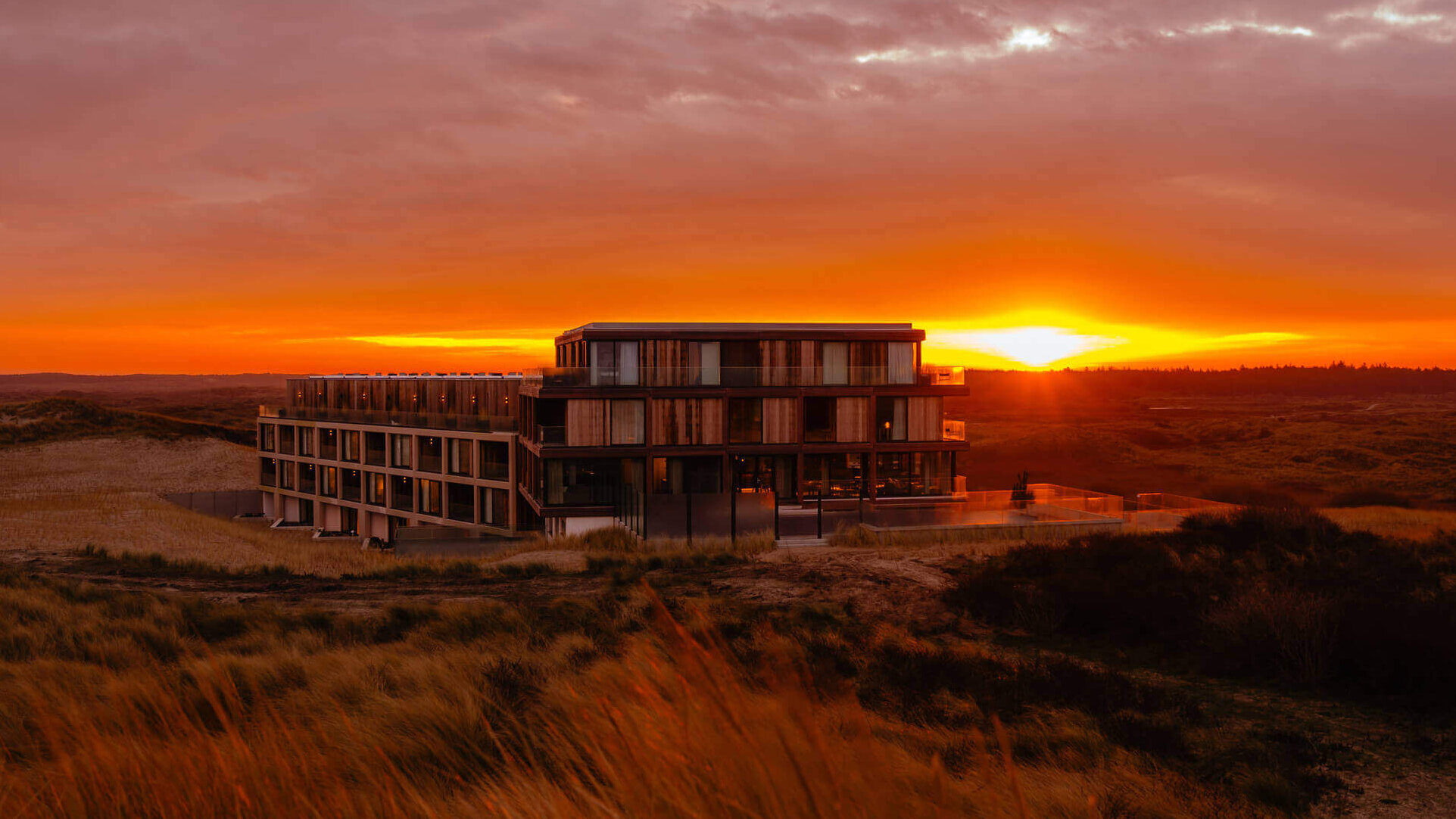
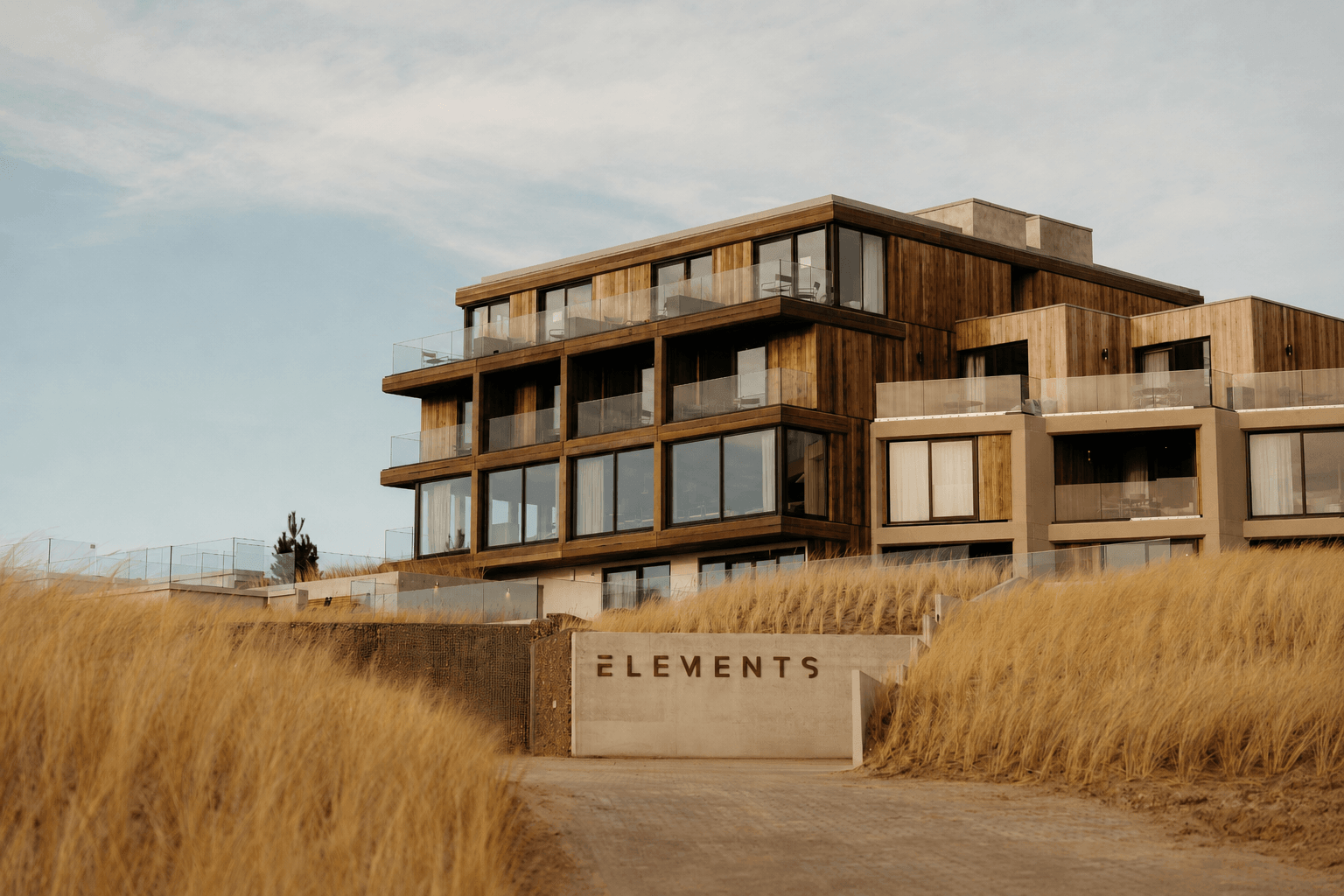
Natuurhotel Elements is now complete, carefully positioned within the footprint of a former abandoned refugee centre that once stood on the site. The new building takes over the same envelope — including the rotated head of the original structure — and reshapes it into a head-and-tail composition, broken down through patterns, lines and setbacks that dissolve the overall scale into the rhythm of the dunes.
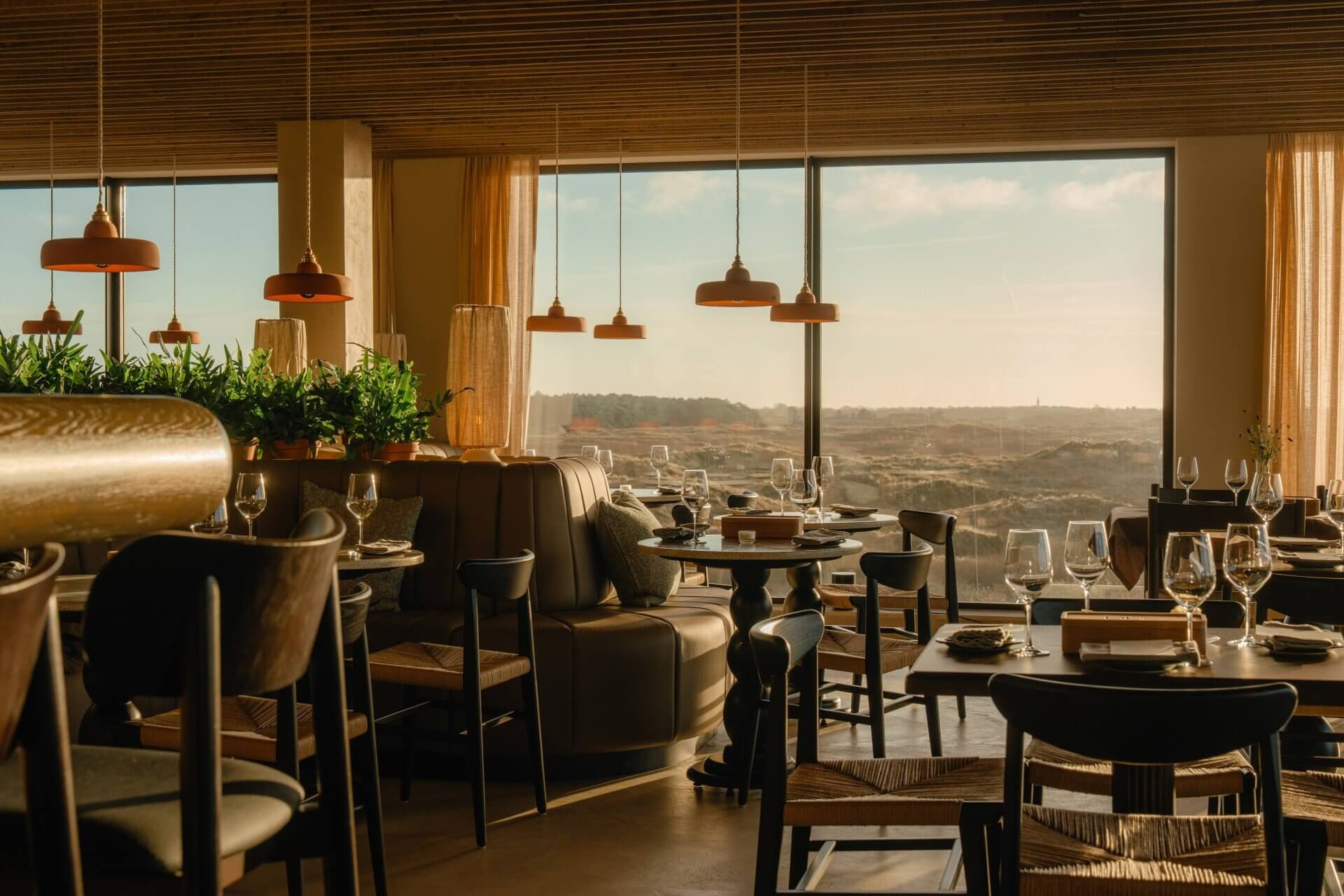
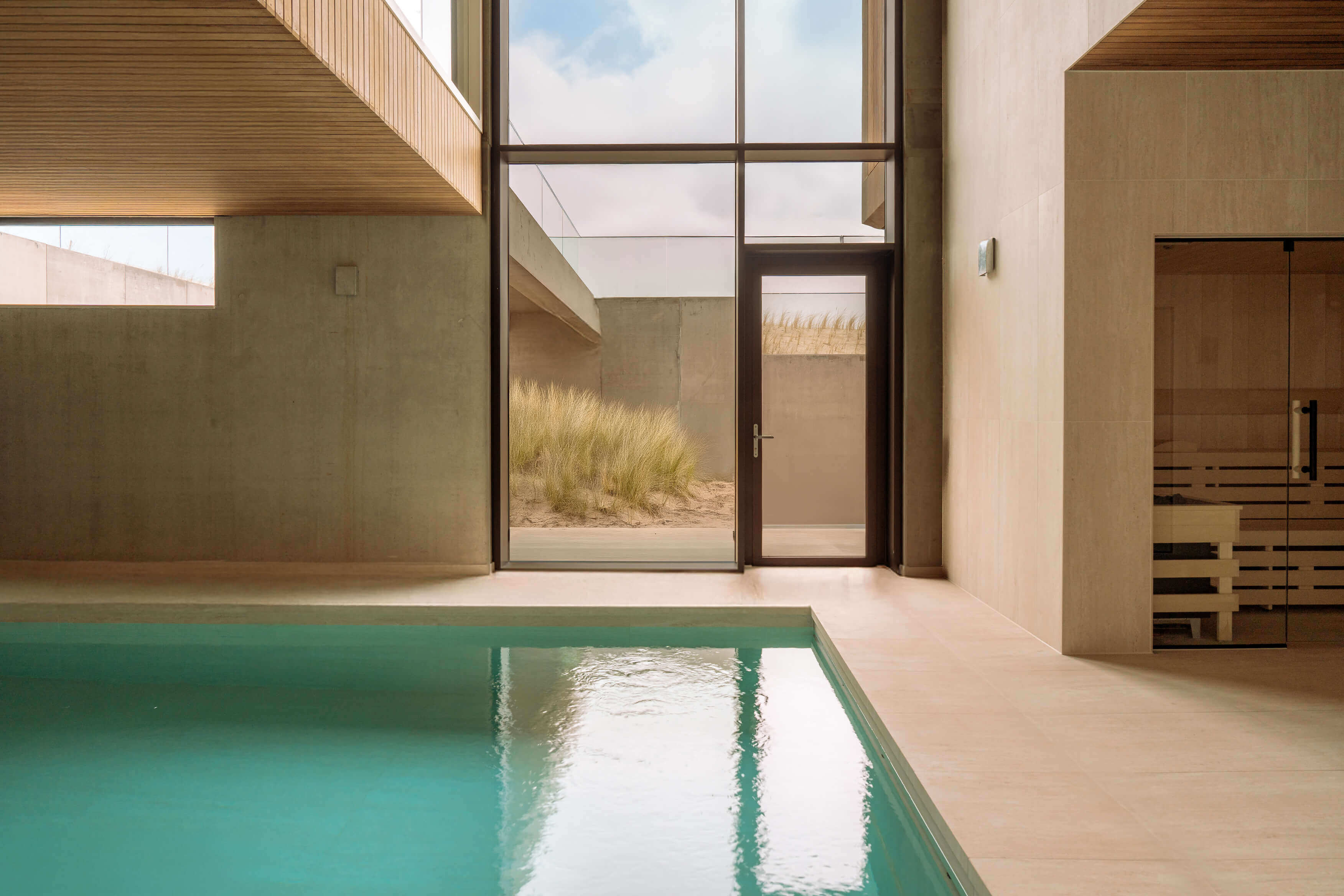
Open to guests, Elements offers 16 hotel rooms, 25 duplex holiday apartments, a spa and wellness area, a beach club, and Restaurant Dún — led by Michelin-starred chefs.
Brutalist and natural simultaneously
On the coast of Terschelling, Elements is a nature hotel exploring barefoot luxury. Every material and spatial decision responds to the forces of the site — wind, sun, sea, and the surrounding dunescape — as well as to a specific piece of the island’s history.
The site sits alongside a preserved section of the Atlantikwall, the defensive line built along the western coast of Europe during the Second World War. A series of concrete bunkers and the connections between them remain on the dune, now open as a historic site — with the future ambition of activating rooms inside them as part of the resort. Elements is designed in dialogue with that concrete inheritance. The building’s multi-level terraces are conceived as brutalist concrete volumes that extend the language of the bunkers into the hotel itself — carrying the dialogue between concrete and dune sand into the plinth, the restaurant terrace, the reception, and the spa below.
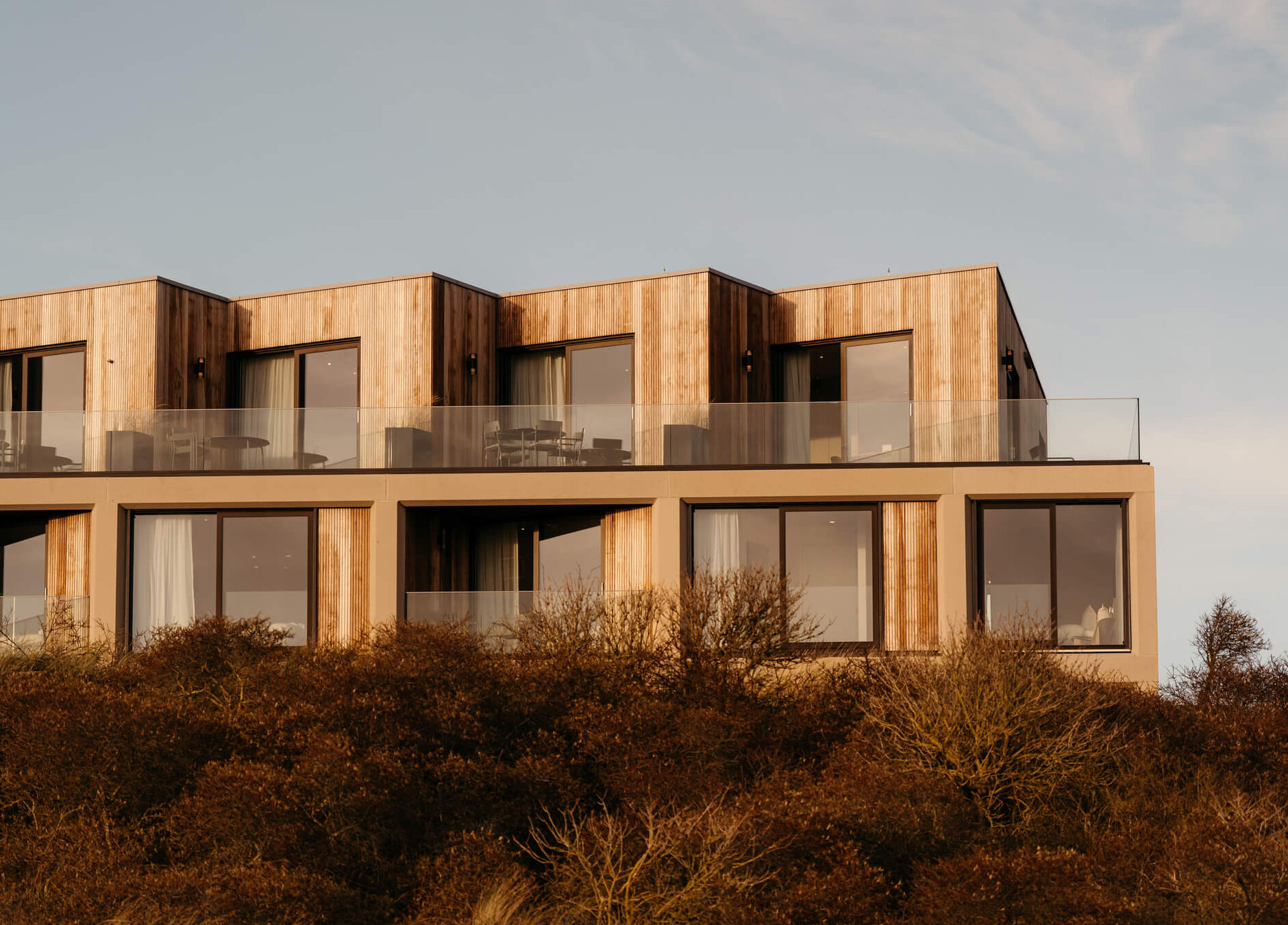
The architecture also draws on a further lineage: the low-slung, timber-clad, landscape-rooted work of Sea Ranch on the Californian coast in the 1960s, reinterpreted here for the North Sea. Robust concrete volumes are softened by weathered timber and refined craftsmanship — brutalist and natural at the same time.
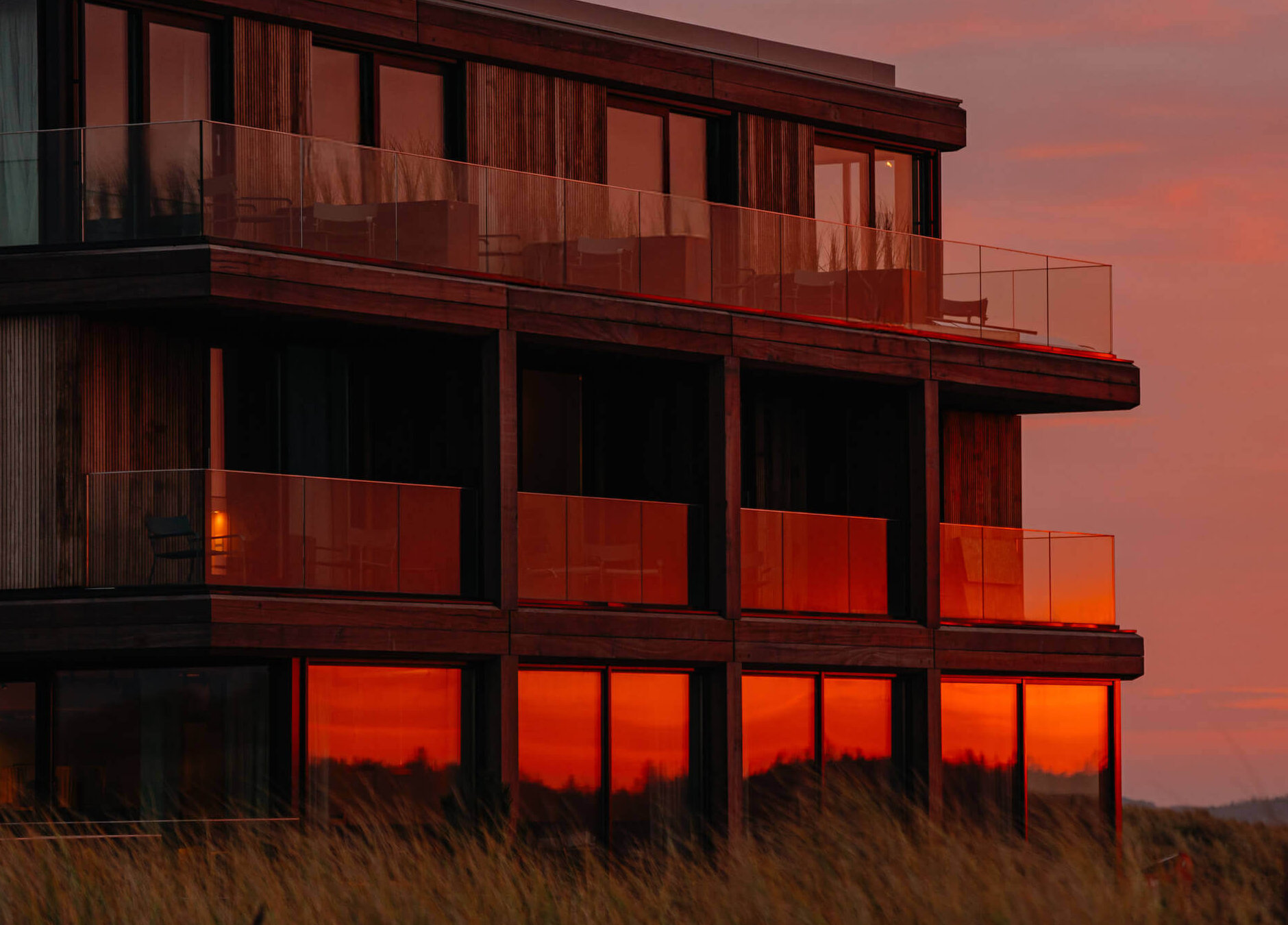
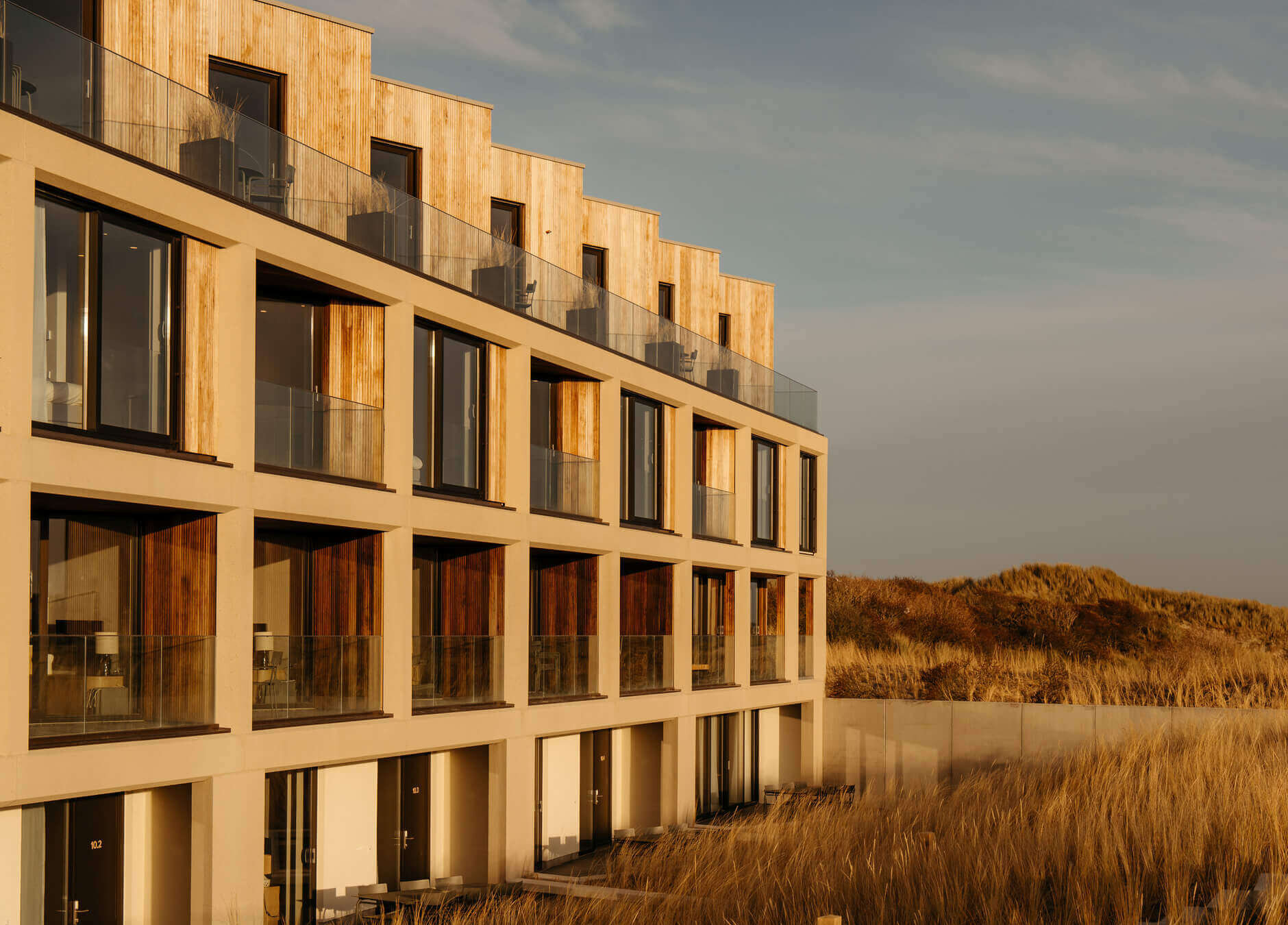
Reacting to exposure to wind, sun and views, Elements is partly sunken, and the apartments have been rotated to create a fishbone floor plan. Views are optimised to the north — upwind, toward the open sea — while quiet, sunny terraces are carved out to the south, following the naturally created slopes of the dunes. Folding the building envelope creates loggias and setbacks that act as wind pockets: sheltered outdoor spaces you can sit in without the chill, even on a winter day. Generous outdoor rooms, all year round.
- Location Terschelling, The Netherlands
- Client Formerum aan Zee BV
- Year 2023 - 2026
- Status Completed
- Program Boutique dune resort and apartment hotel featuring a spa, beach club, and premium hospitality services
- Team Marc Koehler Associates, Erwin Miedema, Jan Bouwmeister, DGMR, Van Rossum RI, HNS Landschapsarchitecten
- Design Marc Koehler Associates, Harmen Nieuwland, Aukje Goossens, Carlos Moreira, Marco Gijsen, Luca Vatteroni, Teun Veelers, Justin Campolucci
Efficient plan
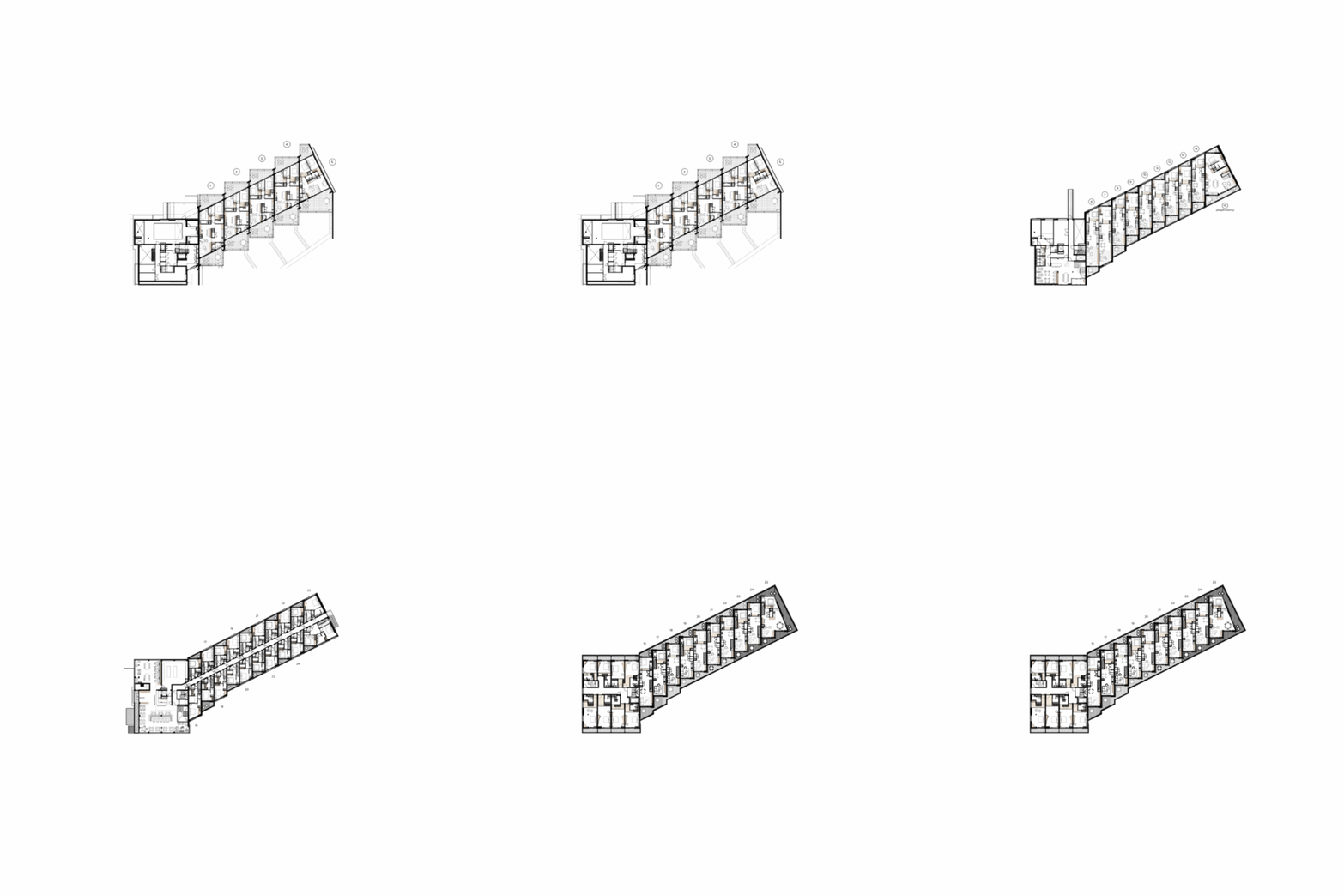
Behind this geometry sits a deceptively efficient plan. A single central corridor on the second floor gives access to duplex apartments both above and below — an approach drawn from Le Corbusier’s Unité d’Habitation, and one that lets four floors of apartments be served by a single circulation spine.
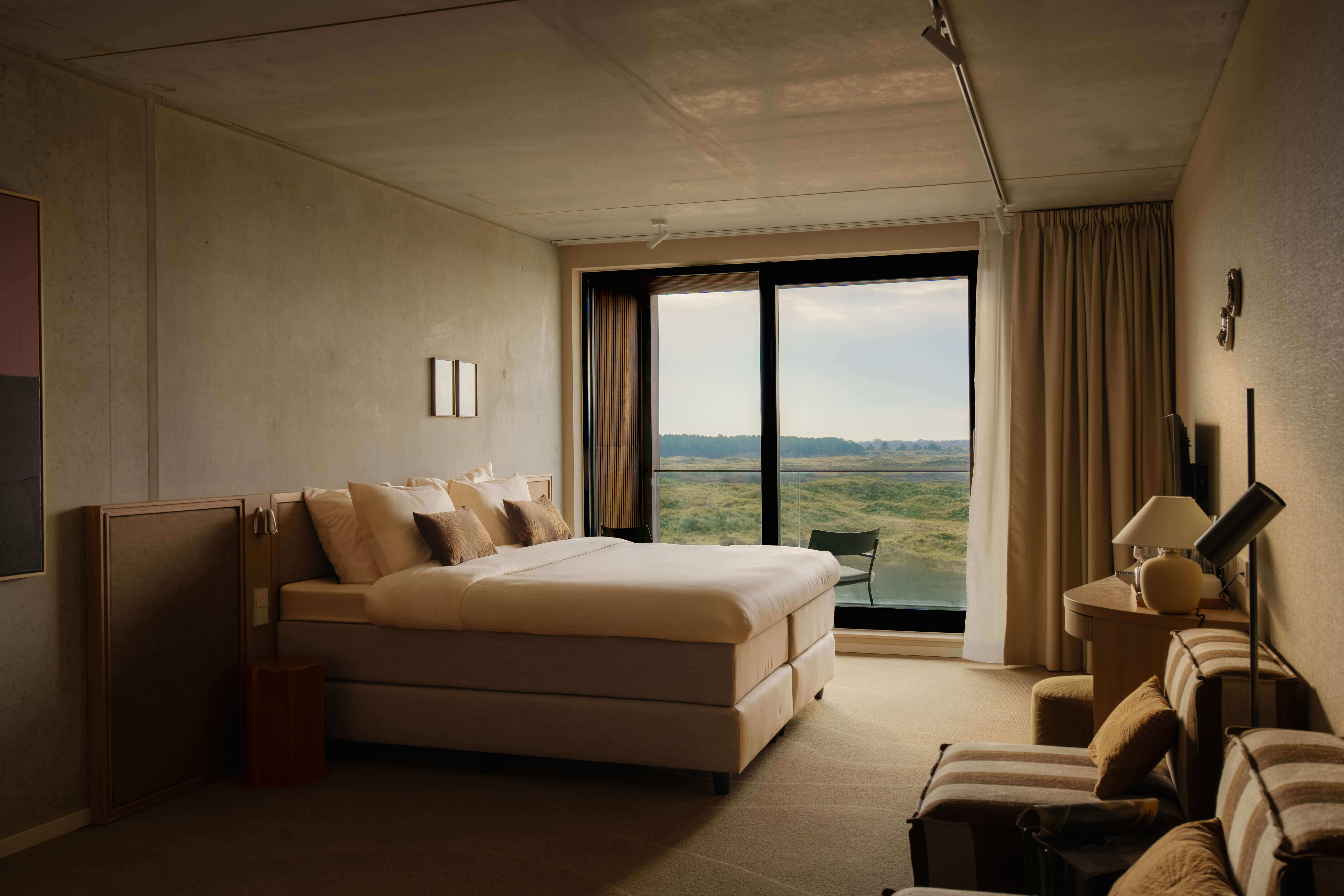
The programme is arranged in two parts. Sixteen hotel rooms are concentrated in the rotated head of the building — the volume that follows the geometry of the former refugee centre — with eight rooms on each of the third and fourth floors. Below sit the reception, restaurant, and public spaces. The tail extends into the dune with 25 apartments across three typologies.
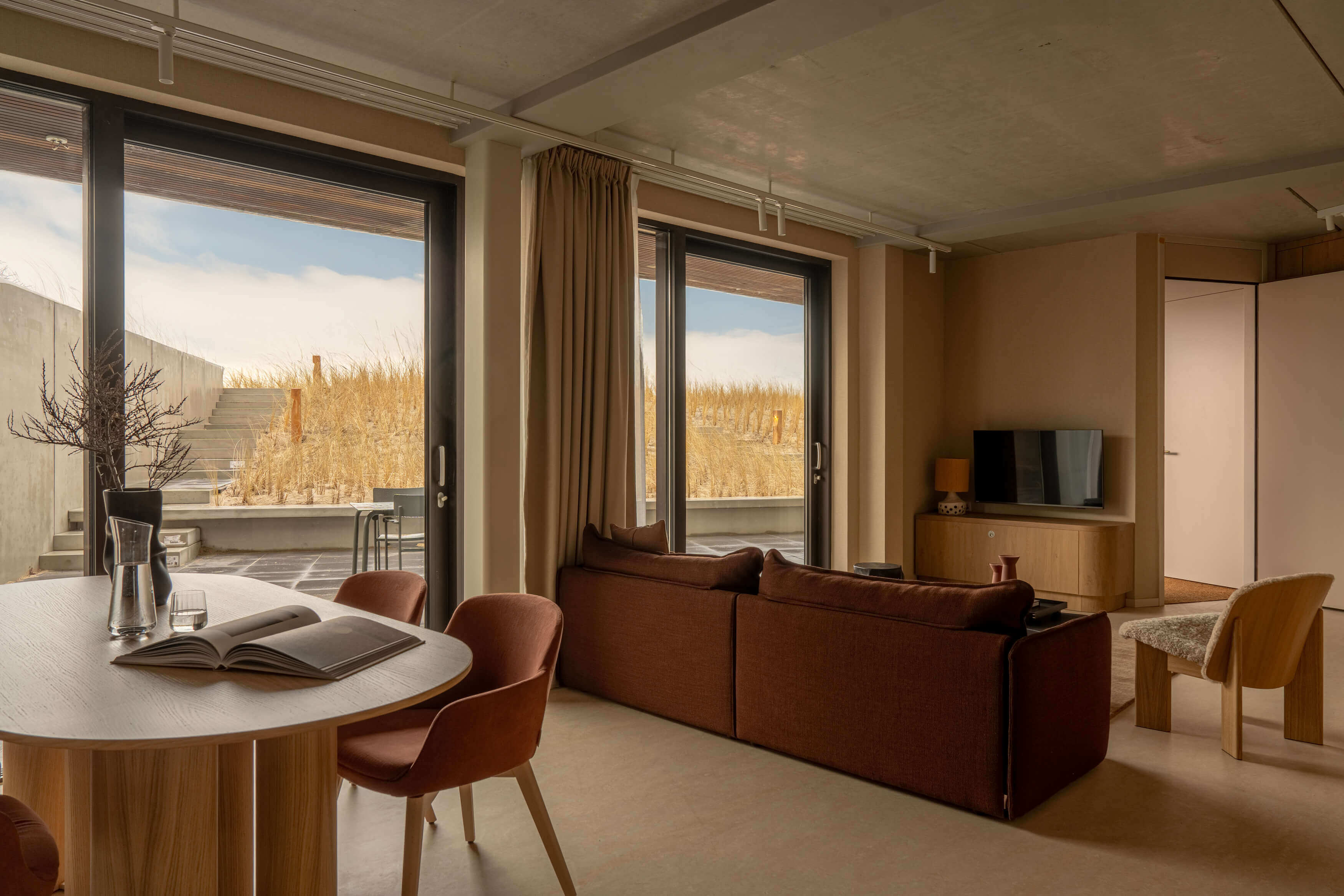
Dune Lofts (ground floor) — five six-person apartments with three bedrooms opening onto the north dunes and the beach. A private south-facing terrace, sheltered in the dunes and sunny in all seasons. Approximately 90–110 m² each.
Duplex Lofts (1st + 2nd floor) — ten four-person duplex apartments organised around the central 2nd-floor corridor. 75 m² across two levels, some with an extra bunk-bed room for up to six guests.
Panoramic Lofts (2nd + 3rd floor) — ten upper-level duplex apartments, including corner units with 180° views and a single penthouse, drawing panoramic views across the dunes toward the sea. Approximately 75–100 m² across two levels.
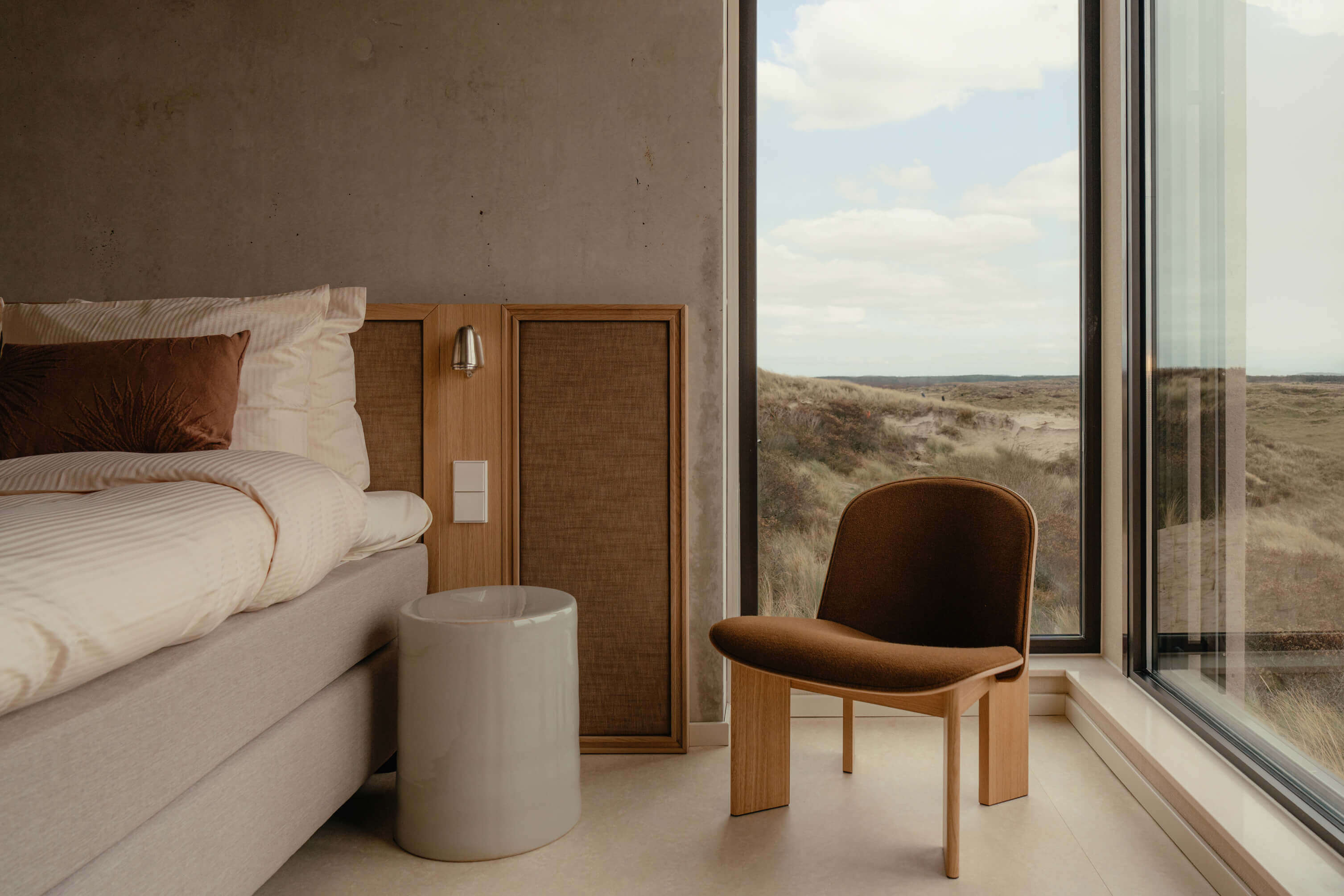
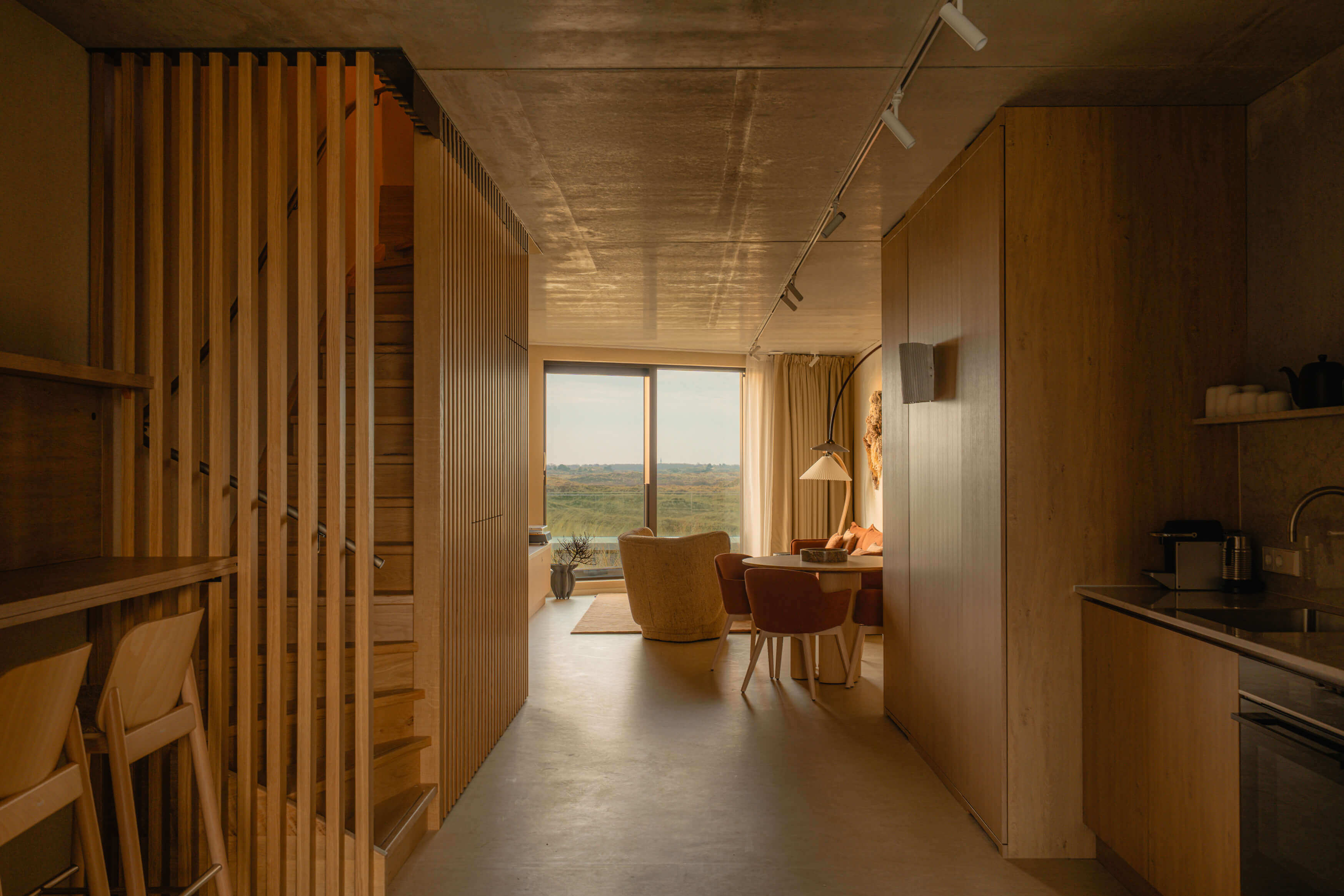
The duplex arrangement gives every apartment the spatial character of a small loft house rather than a hotel unit — two levels, generous ceiling heights, sculptural stairs, and light drawn from multiple sides.
A Sense of Place
Elements combines boutique hospitality with a spa and wellness area, a beach club, and premium guest facilities — a destination deeply connected to the island. Designed for hiking, surfing, cycling and other outdoor activities, the resort is complemented by Restaurant Dún, led by Michelin-starred chefs Richard van Oostenbrugge and Thomas Groot, whose kitchen offers a refined culinary experience shaped by the island itself.
The interiors by Hinabaay Interior & Design are defined by a sophisticated balance between rough and soft, open and intimate. Raw concrete, warm timber, Belgian linen, local wool, custom furniture and handcrafted objects create an atmosphere of understated luxury rooted deeply in the island context. Wooden portals subtly integrate technical elements while enhancing spatial calm and intimacy.
Crucially, the interior design follows a strict horizontal discipline. Every fixed element — furniture, joinery, cabinetry, lighting — is composed on horizontal lines that draw the eye toward the horizon. Sightlines are held low. Wherever you stand in an apartment or a public room, the layering of the interior mirrors the layering of the dunes outside, producing a continuous visual connection between inside and outside. The horizon is never interrupted; it becomes the wallpaper.
Rooted in the Landscape
Elements sits carefully embedded within the dune landscape, minimising its visual impact while strengthening the connection between architecture and nature. Robust concrete volumes and monolithic detailing give the building a timeless, tactile character, softened by warm natural materials and refined craftsmanship. Large openings, deep terraces and framed views create a continuous dialogue with the surrounding landscape, allowing the sea, forest and sky to become an integral part of the experience.
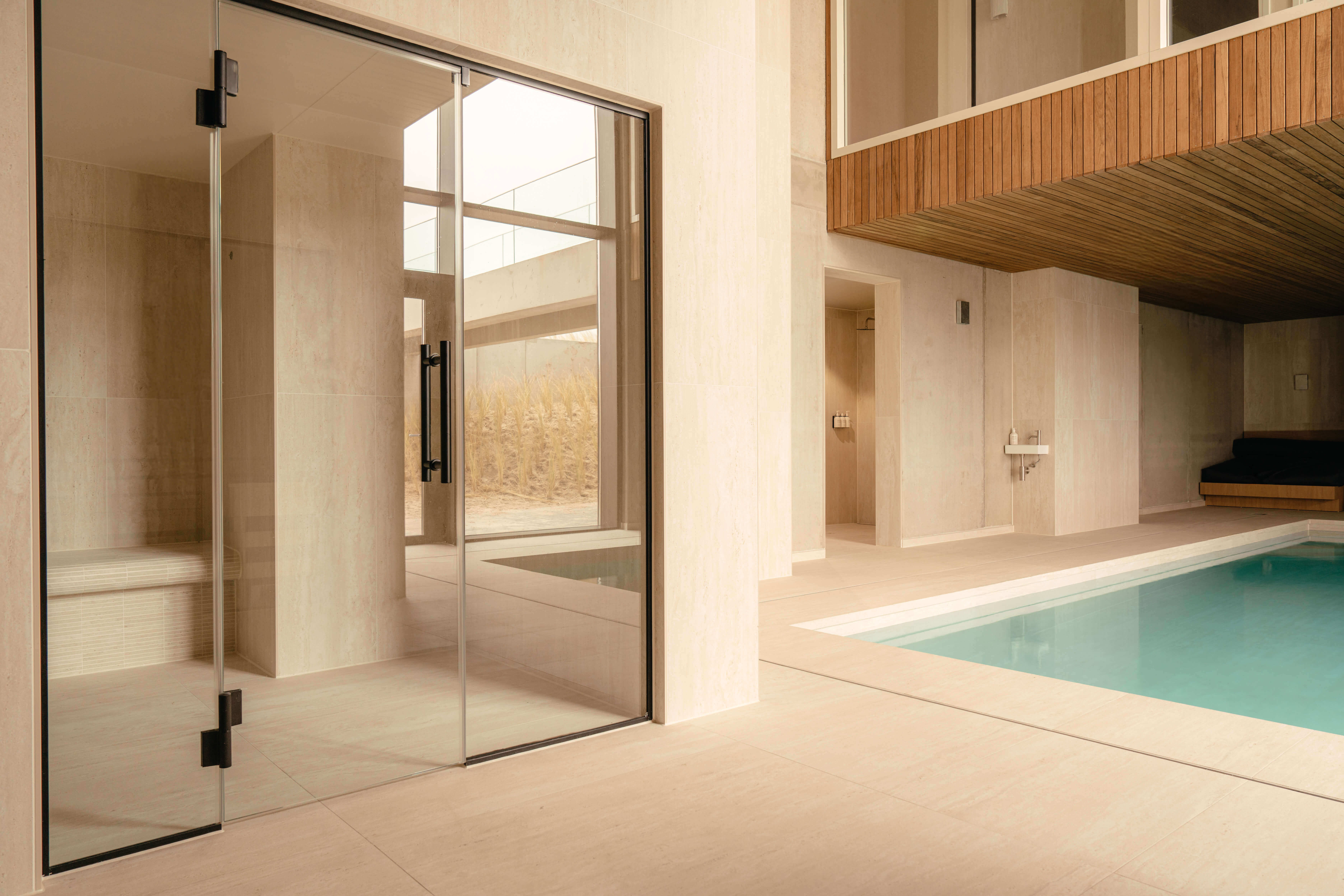
The brutalist concrete language of the terraces continues underground into the plinth of the building — where the spa is designed as a further brutalist volume, sunken into the dune floor. Concrete walls hold the warmth; timber catches the changing light. Wellness at Elements is not a floor added to the programme, but a room subtracted from the ground.
A Climate for Living
The envelope creates a sequence of sheltered spaces around the homes, forming a microclimate that protects from the prevailing winds and creates places to inhabit throughout the year. The orientation of the volumes allows these spaces to capture the sun, offering sheltered outdoor rooms that remain comfortable even during the colder months. In summer, the deep terraces and layered volumes provide shade and temper the heat, while allowing sunlight to penetrate when it is most beneficial.
The Essence of Materiality
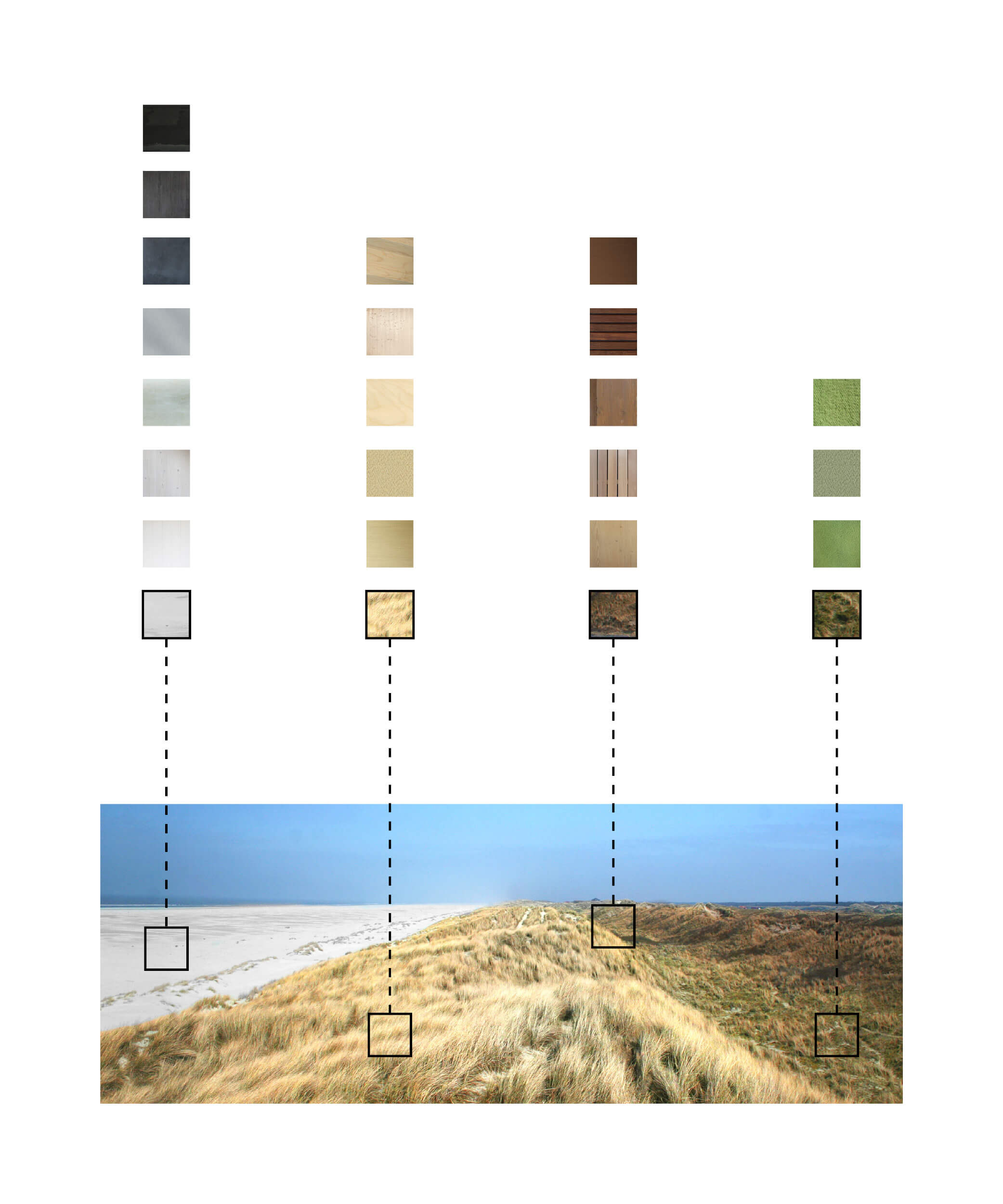
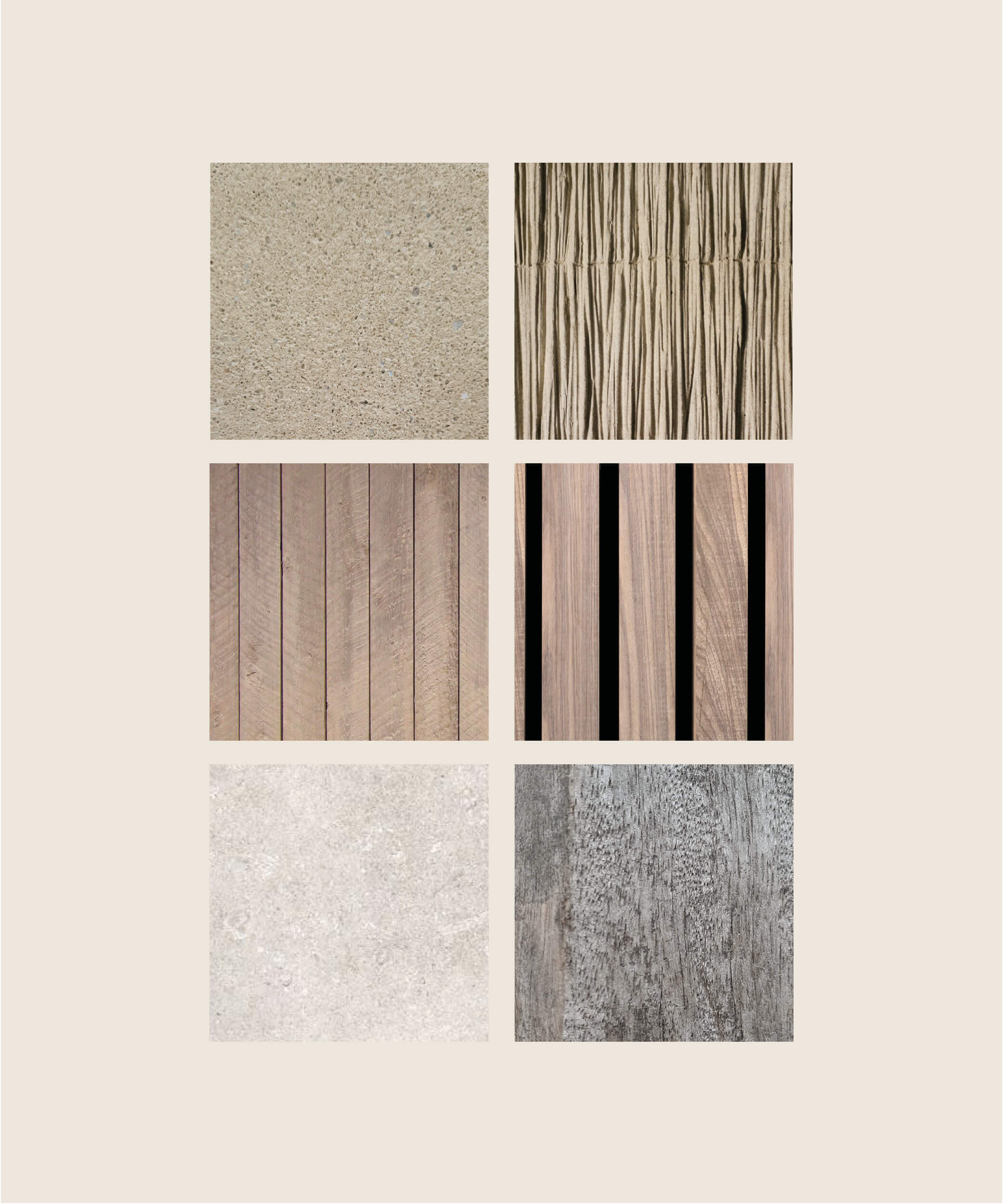
Conceived as a tactile landscape, Elements uses sensory natural materials — timber, concrete, terraco, microcement, glass and aluminium — chosen for their capacity to age beautifully in the sand and salt storms of the North Sea. Over time, they develop a natural patina shaped by the elements, where weathering and imperfections become an expression of beauty.
The muted palette continues into the interior, balanced by soft, organic surfaces. Fixed furniture is kept low to preserve sightlines and emphasise the strong horizontal line of the landscape. Every surface invites touch. Every window frames a piece of the dune landscape it belongs to.
Weathering as a design principle. Barefoot luxury without a single false note.